
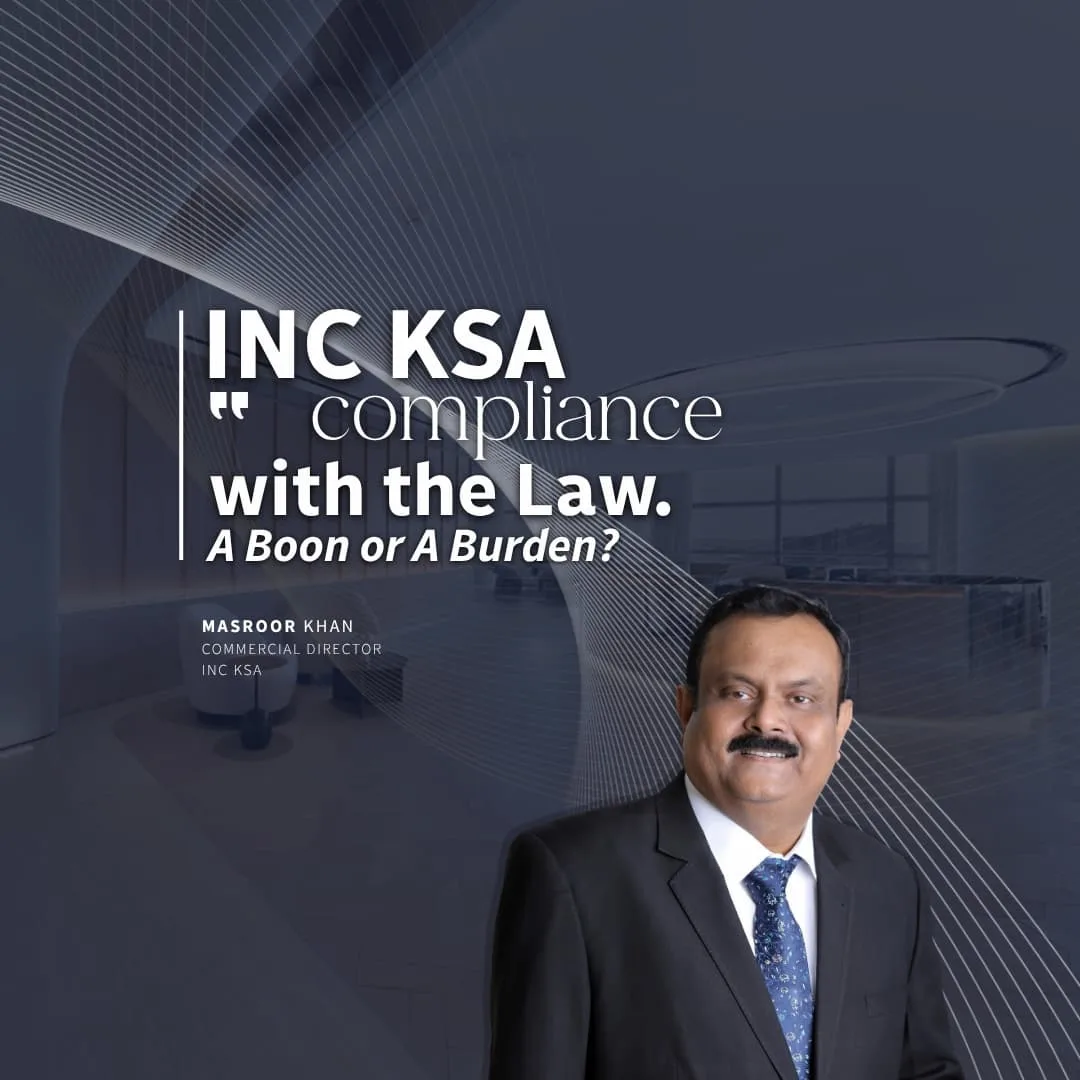
In today’s fast-paced construction and fit-out industry, legal compliance is often viewed as an administrative obligation that increases costs, delays decisions, and adds paperwork. But is compliance truly a burden, or is it one of the strongest foundations of sustainable business success?
The answer depends on how an organization approaches it.
Companies that treat compliance as a mere legal requirement often see it as an expense. They focus on the immediate costs of documentation, audits, permits, contractual obligations, labour regulations, and safety standards. However, this perspective overlooks the far greater costs of non-compliance.
In reality, compliance protects businesses from contractual disputes, financial penalties, project delays, reputational damage, and legal liabilities. More importantly, it builds trust with clients, consultants, regulators, investors, and employees.
In the Saudi Arabian construction sector, where projects are becoming increasingly sophisticated and regulatory expectations continue to evolve, compliance has become a competitive differentiator. Organizations with strong governance and compliance frameworks are better positioned to win high-value projects, manage risks effectively, and maintain long-term client relationships.
Compliance also strengthens internal operations. Clear procedures improve accountability, enhance procurement transparency, reduce commercial disputes, and support ethical decision-making throughout the project lifecycle.
The most successful organizations no longer ask, “What is the minimum we need to comply?” Instead, they ask, “How can compliance create value for our business?”
When embedded into company culture, compliance transforms from a legal obligation into a strategic asset. It enables sustainable growth, strengthens corporate reputation, and creates resilience in an increasingly regulated business environment.
Ultimately, compliance is not a burden imposed by the law—it is a discipline that protects businesses, empowers ethical leadership, and creates long-term value.